Minimum Data Set Accuracy and Supporting Nursing Note Requirements
Nursing notes and MDS codes must align to protect reimbursement and care quality.

Minimum Data Set accuracy depends on a two-way bridge between nursing notes and coded assessment fields. Each code needs supporting clinical evidence, and relevant evidence in the notes needs to reach the assessment. This article explains what that alignment requires and why maintaining it throughout the assessment cycle, rather than before an audit, protects reimbursement, care planning, and quality reporting.
What the MDS actually is and what rides on its accuracy
The MDS is a federally mandated comprehensive clinical assessment required for every resident in a Medicare- or Medicaid-certified nursing home, regardless of payer source. Its reach extends beyond the assessment itself. MDS item responses trigger Care Area Assessments, which, after further clinical assessment of the triggered areas, form the foundation of the resident’s individual care plan. An inaccurate response can therefore distort the clinical work that follows.
Medicare uses MDS data to calculate reimbursement under PDPM, and many state Medicaid programs use it for reimbursement through state-specific methodologies. Not all states use PDPM. The Five-Star Quality Rating System also draws from MDS submissions, so a coding error can propagate across several uses of the same record.
CMS identifies RAI User’s Manual version 1.20.11 as effective October 1, 2026. The manual sets out how to code, but the evidence needed to use it is often in other records. The MDS records discrete values, while nurses describe much of the resident’s clinical status in narrative notes.
Why the gap between nursing notes and coded MDS fields is structural, not accidental
Standard EHR workflows do not automatically connect narrative observations to structured MDS fields. Clinical notes, shift summaries, and patient narratives account for a large majority of EHR data. Flowsheets, meanwhile, are large, multitab tables with hundreds of rows. Reconciling those records requires deliberate effort or dedicated tooling, even when the underlying clinical observation is sound.
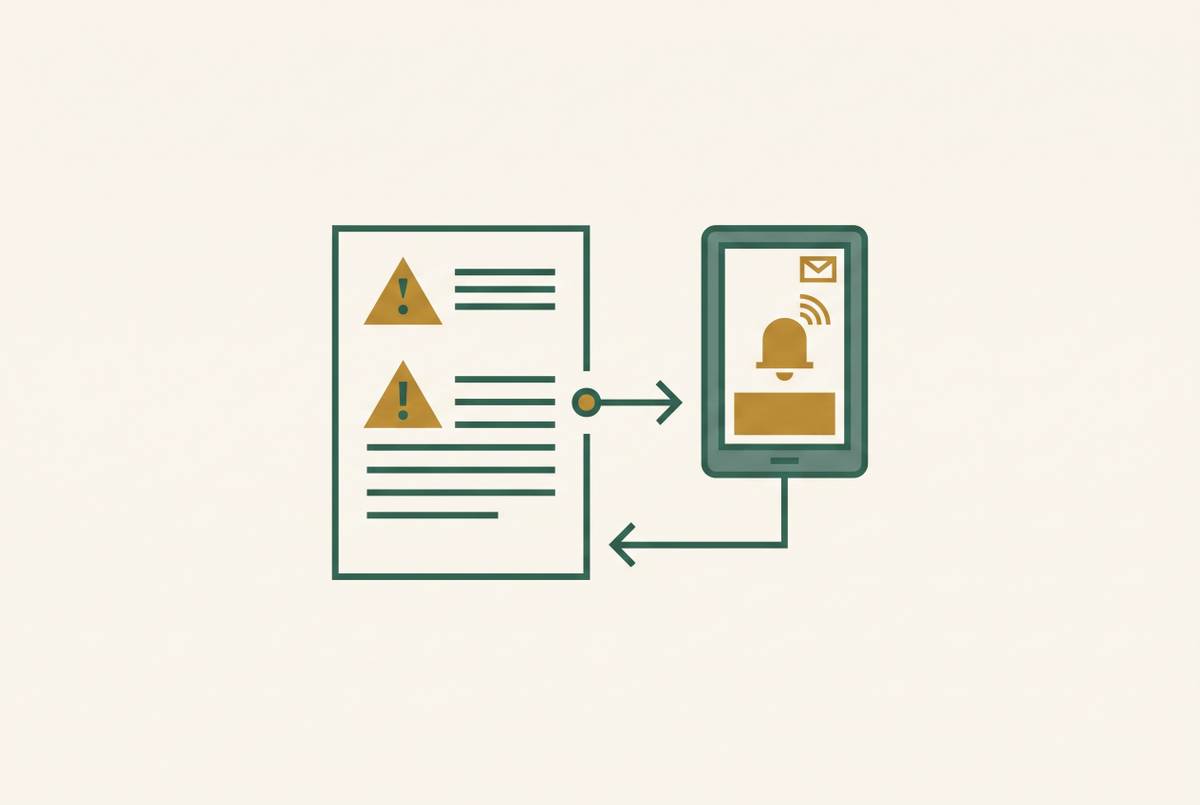
The workflow asks the same observation to serve two purposes without providing a reliable bridge between them. A nurse documents what happened in clinical language, and an assessment professional later translates the evidence into a coded value. That bridge must work in both directions. Reviewing codes against notes detects unsupported entries, while reviewing notes against codes detects relevant findings that never reached the assessment.
The U.S. Surgeon General’s Advisory on health worker burnout describes how much work it takes for health workers to keep records. MDS coordinators also manage multiple assessments simultaneously, with each taking three to four hours, while turnover complicates consistency. AI scribes can generate narrative portions of nursing and therapy notes, but structured MDS items and PDPM-driving fields still require coding by a trained nurse or therapist.
Which MDS sections most commonly lose their note-level support
The gap is especially consequential where clinical status is nuanced or changes over time. Section M, Skin Conditions, depends on wound details and chronology that narrative notes may describe more fully than coded fields. RAI Manual v1.20.11 updated guidance for pressure ulcers/injuries present on admission that heal and subsequently reopen. It also added information on advanced wound care dressings, skin substitutes, and adhesive bandages.
Sections C and D depend on another kind of chronology. When a resident has more than one interview during the look-back period, the coded cognition or mood result must match the evidence from the interview that applies. Section GG requires a different translation, from nursing and therapy descriptions of self-care and mobility into functional ability codes. In each case, the existence of a note does not establish that its meaning reached the assessment.
Diagnoses and swallowing findings present similar risks across disciplines. Section I coding must be backed by physician documentation and nursing observation notes, while dietary narratives may describe swallowing difficulties that matter for the PDPM speech-language pathology component. CMS’s PDPM Grouper V2.5000 changes clinical category mappings and NTA comorbidities for assessments with target dates on or after October 1, 2026.
What the regulatory framework requires when coding and notes diverge
F636 requires an assessment of each resident’s functional capacity that is complete and accurate, follows a standard, and can be reproduced. Supporting documentation makes accuracy and reproducibility demonstrable. F638 requires quarterly review assessments at least once every three months, creating recurring exposure when contemporaneous evidence is absent. RAI Manual v1.20.11 also clarifies that state or payer requirements do not replace, modify, or add to CMS coding requirements for non–Section S items.
F641 establishes the sharper enforcement boundary. CMS policy changes effective April 28, 2025, require surveyors to report patterns of inaccurate MDS assessments. A pattern of three or more inaccurate codings, where indications show that the coder knew the coding was inaccurate, can be referred to the OIG as possible falsification. Surveyors must cite the scope of non-compliance at a minimum of pattern or widespread, as appropriate. The knowledge condition matters because an unsupported entry is not automatically evidence of deliberate falsification.
Healthcare Management Solutions LLC conducts MDS Validation Audits using a randomly selected sample of SNFs and requires supporting medical records in PDF format. Too little documentation can also lead to Additional Documentation Requests, and a high ADR volume brings more risk from audits and to reimbursement.
How the consequences of unsupported MDS coding play out in practice
A 2025 OIG audit found that one nursing and rehabilitation center failed Medicare documentation and coding requirements on nearly every sampled claim. The estimated overpayment reached the tens of millions of dollars. The scale of exposure depends on the reach of the faulty process.
A documentation gap can lead to errors in PDPM coding that affect how case-mix is calculated for a payment period and therefore alter the basis of reimbursement. With under-coding, clinical conditions recorded in the notes never reach the fields used for payment.
Survey and reputational consequences add another layer. Even a facility that performs well overall can meet F641’s pattern threshold with a few inaccurate codings when there are the required signs that the coder knew they were wrong. Errors in MDS data can also lower the Five-Star Rating, which can in turn affect census and revenue from admissions. These are distinct exposures arising from the same dependence on a defensible assessment record.
New timeline pressures that make the documentation gap harder to close
The FY 2027 SNF Final Rule shortens the MDS reporting window after each quarter for the FY 2029 SNF QRP. SNFs begin collecting data under the new timeline in January 2027. Workflows must be ready by that collection date. A shorter window leaves less room to reconcile missing evidence after the quarter closes.
CMS implemented the Nursing Home Risk-Based Survey nationwide beginning September 8, 2026, offering a streamlined survey for qualifying higher-performing facilities. A failed MDS resident-assessment audit explicitly disqualifies a facility from eligibility. Documentation accuracy is therefore a condition of access to the less burdensome pathway. CMS survey funding has not increased since 2015, while complaint survey workload has grown by more than a fifth, making the model partly a resource-reallocation measure.
CMS also removed four SDOH standardized patient assessment data elements beginning FY 2027 to balance collection needs against staff burden. That reduction does not change the core MDS accuracy requirements. Draft MDS Data Specifications V3.11.0 are available for use in production on October 1, 2027, bringing more changes to the instrument when facilities already have little time to adjust.
What supporting documentation must actually contain for key MDS sections
A supporting note must contain a clinical observation that maps to the coded item and falls within its specific look-back period. A clinically accurate note outside that window does not support the coding. The record must also identify the clinician responsible for the observation. These requirements distinguish usable evidence from a general mention of the topic.
For Sections C and D, notes must establish which interview responses were used and why, particularly when responses vary across interviews. For Section M, the wound must be described in enough detail to support staging. When a pressure ulcer heals and reopens, the record must establish the chronology and whether it is the same wound or a new one. For Section J, descriptions of falls and major injuries must align with the RAI definitions rather than rely on colloquial terms that invite different interpretations.
Significant-change documentation must describe the nature of the change, when it was first observed, who identified it, and the clinical basis for determining its significance. Simply recording that the resident changed does not supply that basis. Therapy progress notes, dietary observations, and social work entries support specific sections, so staff must work together to bring that evidence into the assessment.
Where facilities most commonly get the cross-check between notes and codes wrong
A note stating “resident ambulating with difficulty” does not support a specific GG mobility code. A statement that “skin intact” does not support or refute a Section M staging decision.
Timing and attribution create less visible gaps. A wound assessment performed one day outside the look-back period cannot support that item, regardless of its clinical quality. A dietary note describing swallowing difficulty contains relevant evidence, but it supports coding only when the MDS coordinator or therapist reviews it and links it to the field. The note is not self-executing, and failure to review it can leave a documented condition uncoded.
If nursing and behavioral health use different terms for a behavior, the coordinator may be unable to translate them reliably into one coded value. Too many dashes also cause problems because a dash signals that data is missing and is different from zero. A pattern of dashes in required fields can affect QRP compliance and potentially trigger a payment update reduction.
Why continuous note-to-MDS monitoring is more reliable than pre-survey audits
Periodic manual audits identify gaps only after they have accumulated. Because MDS Validation Audits use random selection, a facility also cannot know ahead of time which assessments will need supporting records. Keeping notes and codes in line throughout the assessment cycle is therefore more reliable than preparing only some assessments for review. The compressed reporting window further reduces the time available for end-of-cycle repair.
NLP can extract and structure narrative EHR text so that unstructured notes receive documentation accuracy review and decision support. The same analysis can identify clinical conditions missing from coded fields and discrepancies between a code and its supporting note. It enables broader review without treating automated detection as a substitute for trained clinical judgment.
Specific alerts also change how coordinator time is used. Instead of searching every chart for possible omissions, the coordinator can focus on identified discrepancies and the clinical decisions needed to resolve them. Risk stratification using MDS-comparable items, including weight loss, ADL scores, cognitive deterioration, and chronic conditions, can also help make emerging changes visible before they trigger an F637 significant-change assessment obligation.
How to build a note-to-MDS alignment practice that holds up under survey
Standardize documentation language across nursing, therapy, dietary, and social work so that terms map reliably to MDS definitions. Prioritize falls, skin conditions, cognition, and functional status. Assign who will review notes for each section so the coordinator has help gathering the evidence. Treat the RAC-CT credential from the American Association of Post-Acute Care Nursing as a baseline for MDS coordinators because it validates expertise in assessment coding, scheduling, and care planning.
Tie the review process to F636, F637, and F638 timelines so that supporting evidence is gathered before coding. Use continuous automated monitoring to surface specific note-to-code gaps for clinical review. When an audit or alert finds a discrepancy, return the finding to the nurse or therapist who wrote the note as a teaching opportunity. Track ADR volume and patterns to learn where documentation is weak as part of the administrative work.
Put these duties, review steps, and ways of sharing feedback into practice before the next shortened collection cycle begins. Preparation must address when evidence is recorded and reviewed and when the assessment is submitted. The workflow deadline is January 2027.